The short answer
SEO gets your pages ranked in Google's list of links. GEO, generative engine optimisation, gets your store named inside the answers that AIs like ChatGPT and Gemini write. AEO, answer engine optimisation, shapes your pages so a system can lift a direct answer from them. All three reward the same base: product pages that are open, accurate and specific.
Key takeaways
- SEO is about ranking in a list of links. GEO and AEO are about being named inside the answer.
- Google says its AI features need nothing extra beyond good search practice.
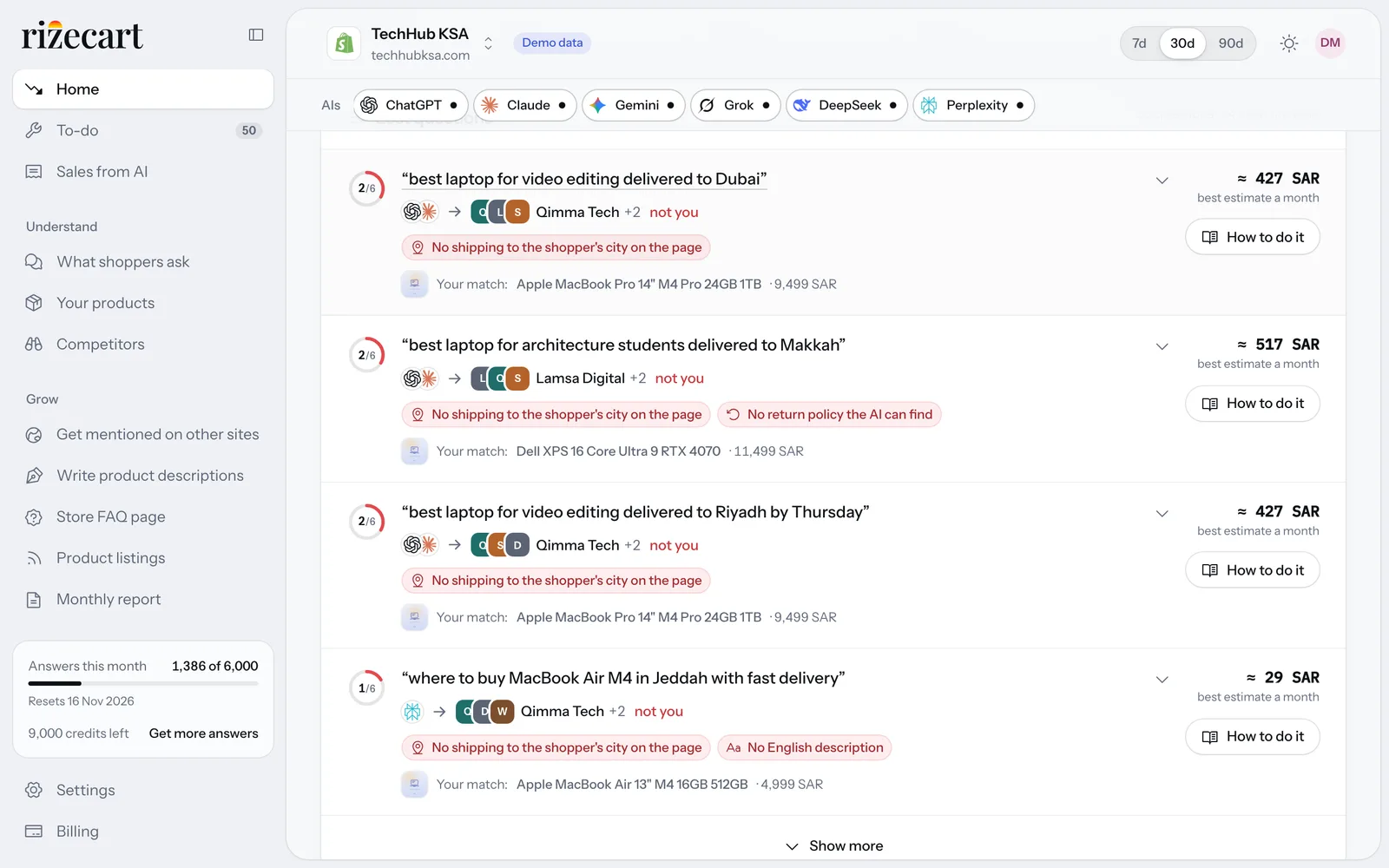
- What changes is the question: longer, more specific, with a city, a budget and a delivery day.
- Mentions on other sites and hard facts on your pages carry more weight in AI answers.
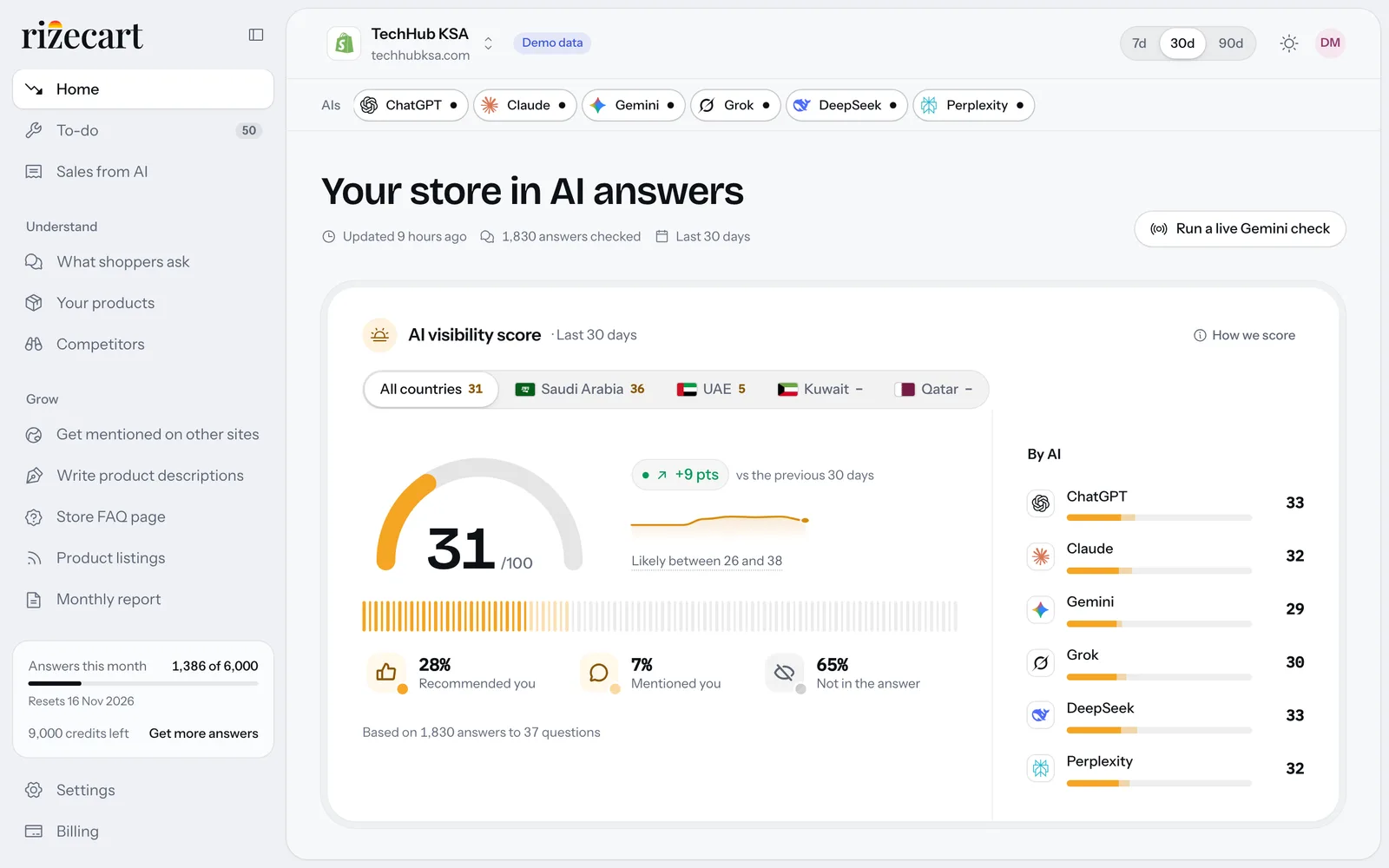
- You measure GEO by asking the questions and recording who gets named, not by rank.
What do SEO, GEO and AEO mean?
Three acronyms, one worry: will buyers still find my store? Here they are in plain words.
SEO: search engine optimisation
Making your pages easy for Google and Bing to find, understand and rank in their list of links. You win a position on a results page. The shopper still has to click, compare and decide.
GEO: generative engine optimisation
Making your store the one an AI names when it writes an answer. “Generative engines” are tools like ChatGPT, Gemini, Perplexity, Claude and Google's AI Overviews, which write a reply instead of listing links. The term comes from a research paper led by Princeton researchers, published at the KDD conference in 2024.
AEO: answer engine optimisation
Shaping a page so a system can lift a direct answer from it: a clear question, a short answer, then the detail. The idea grew up with Google's answer boxes and voice assistants, and it now applies to AI answers too. In practice GEO and AEO overlap so much that most people use them for the same work.
SEO vs GEO vs AEO, side by side
| SEO | GEO | AEO | |
|---|---|---|---|
| What it is | Ranking your pages in search results | Getting your store named in AI-written answers | Making your page the direct answer that gets quoted |
| Where it shows | Google and Bing results pages | ChatGPT, Gemini, Perplexity, Claude, Google AI Overviews | Answer boxes, voice assistants, AI answers |
| What it rewards | Relevance, links, pages bots can crawl | Clear facts, mentions on other sites, pages bots can read | A plain question with a short, complete answer |
| How you measure it | Rank, clicks and impressions in Google Search Console | How often each AI names you for your buyers' questions | Whether your wording is the one quoted |
| A win looks like | Position 1 to 3 for “oud perfume” | Named first for “oud under $100 delivered to Doha by Thursday” | Your delivery line quoted word for word |
Look at the measure row. In SEO you track a position. In GEO there's no position to track. You're either in the answer or you're not, and the shopper who reads it often never sees a list of links at all.
What stays the same?
More than the hype suggests. Google says there are “no additional requirements to appear in AI Overviews or AI Mode”, and that no special schema is needed. The basics still decide whether any AI can use your page:
- Pages bots can open. If a crawler can't reach a page, no AI can recommend it.
- Accurate structured data. The hidden Product and Offer markup on a page must match what shoppers see: the same price, the same stock.
- Good product pages. A clear title, real photos, a full description, a visible price and stock.
- Real reviews. From real buyers, on your store and on other sites.
If your SEO is in good shape, you're not starting from zero. You're starting from the base everything else stands on.
What changes?
Three things: the question, what earns trust, and the scorecard.
- The question is longer and has conditions. Shoppers don't type “oud perfume”. They ask for “oud under $100, delivered to Doha by Thursday”. Ranking for the short phrase doesn't help if your page never mentions Doha or a delivery time.
- Facts beat adjectives. In the Princeton study, adding statistics, quotes and cited sources lifted visibility in AI answers by up to 40% in a test benchmark, while stuffing in keywords did little.
- Mentions matter more than links. Ahrefs found that mentions of a brand across the web tracked AI visibility far more closely than backlinks did.
- JavaScript can hide you. The crawlers behind ChatGPT, Claude and Perplexity don't run JavaScript, so details that load by script are invisible to them.
- Several engines, each with its own bot. OpenAI, Anthropic and Perplexity each publish the names of their bots. Block one and that AI can't read you. Which AI crawlers to allow.
- Clicks arrive tagged differently. Links from ChatGPT usually carry
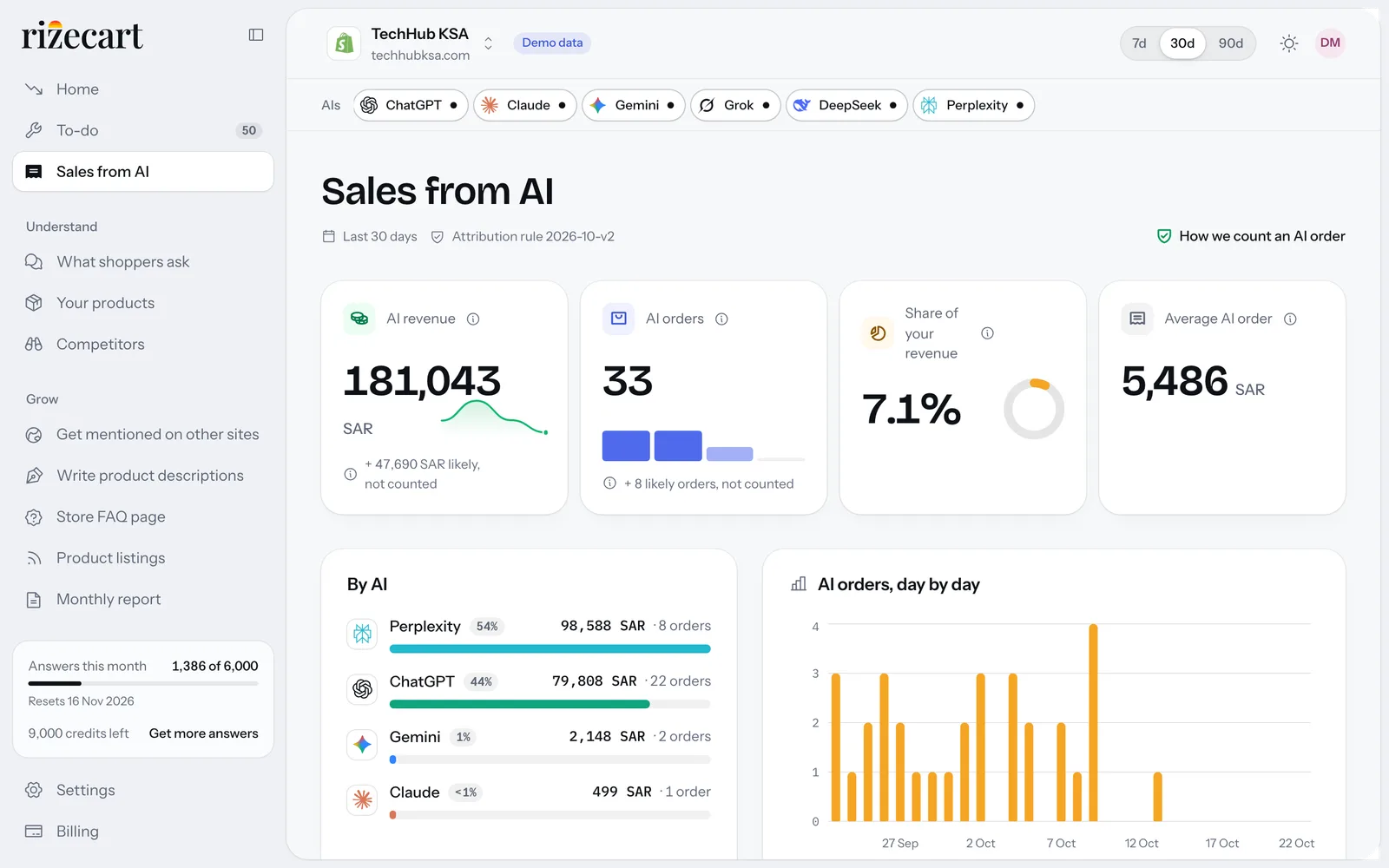
utm_source=chatgpt.com, while Perplexity and Claude show up as referrers. Visits from Google's AI Overviews can't be told apart from normal Google search. Our attribution rule lists every signal, and this guide shows how to track the orders.
40%
0.66
What should you ignore?
What to do this month
You don't need a new agency or a new plugin. You need four weeks and your 20 best-selling products.
Week 1: make sure the AIs can read you
Check that your robots.txt allows the AI search bots and Googlebot, and that your price and stock show without JavaScript. The free store check tests both in two minutes.
Week 2: fix the facts that filter you out
On your top 20 products, write the price as text, state stock clearly, add delivery time and shipping price for the cities you serve, and link your return policy. The course Fix what the AI can't see walks you through each one.
Week 3: write facts in Arabic and English
Replace adjectives with size, materials, origin and what's in the box, the same in both languages. How to write Arabic product pages for AI.
Week 4: ask, record, plan mentions
Ask ChatGPT, Gemini and Perplexity ten of your buyers' questions. Write down who is named and which sites are cited. Those sites are where you want reviews and mentions next.
Want this done every week, across up to six AIs, with each fix written into your store once you approve it, and any change undone in one click? That's how Rizecart works; see the plans.
Questions
Is SEO dead now that people ask AI?
Are GEO and AEO the same thing?
Do I need special schema or an llms.txt file for AI?
How do I measure GEO?
Should I stop SEO and switch to GEO?
Sources
- Aggarwal et al., GEO: Generative Engine Optimization (KDD 2024)
- Google Search Central: AI features and your website
- Google Search Central: Merchant listing structured data
- Google Search Central: Google's common crawlers
- Ahrefs: AI brand visibility correlations (75,000 brands)
- Vercel: The rise of the AI crawler
- EZY: Do AI bots read llms.txt?
- OpenAI: Overview of OpenAI crawlers
- Anthropic: Does Anthropic crawl data from the web?
- Perplexity: Perplexity crawlers
- Shopify.dev: llms.txt template